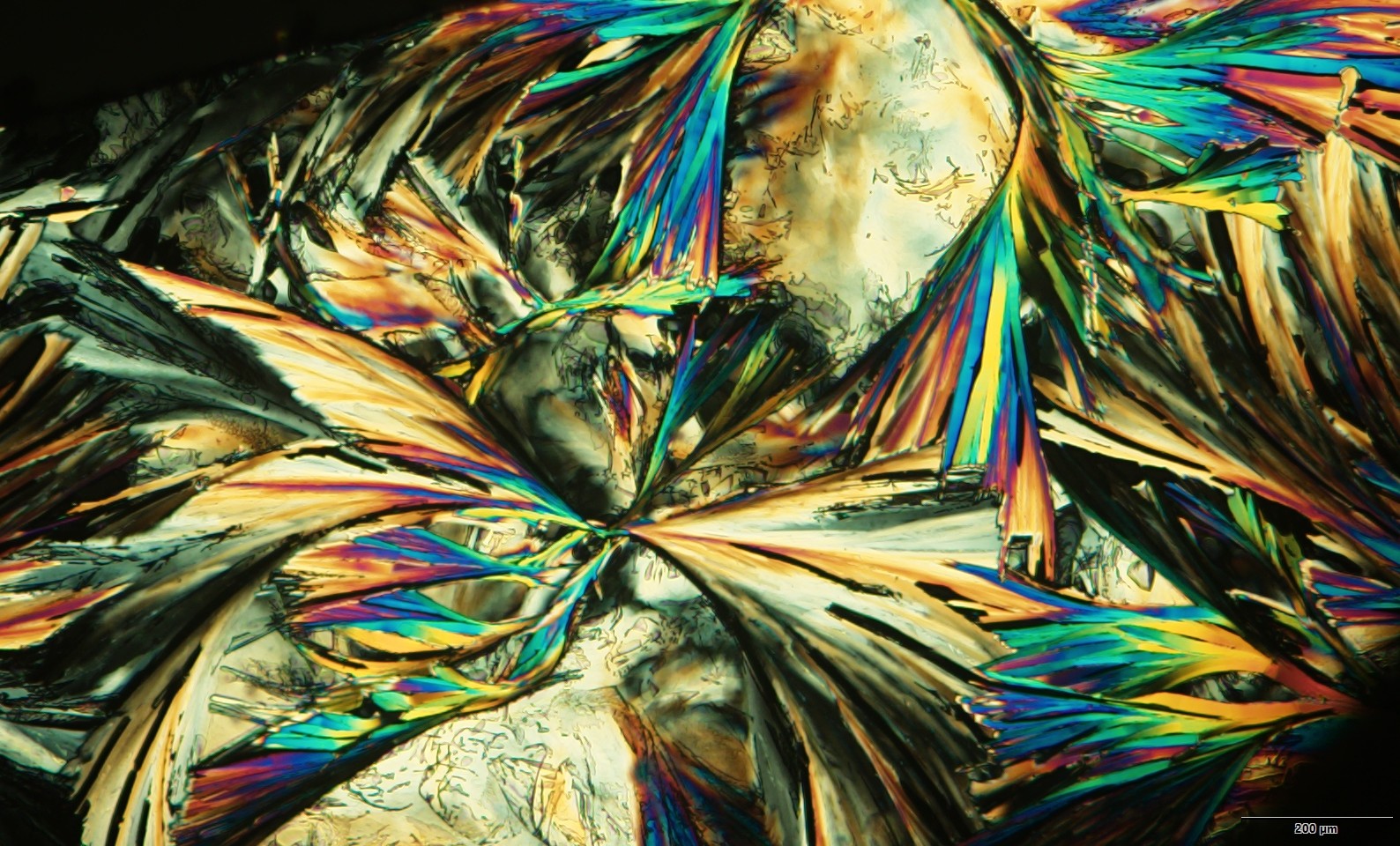
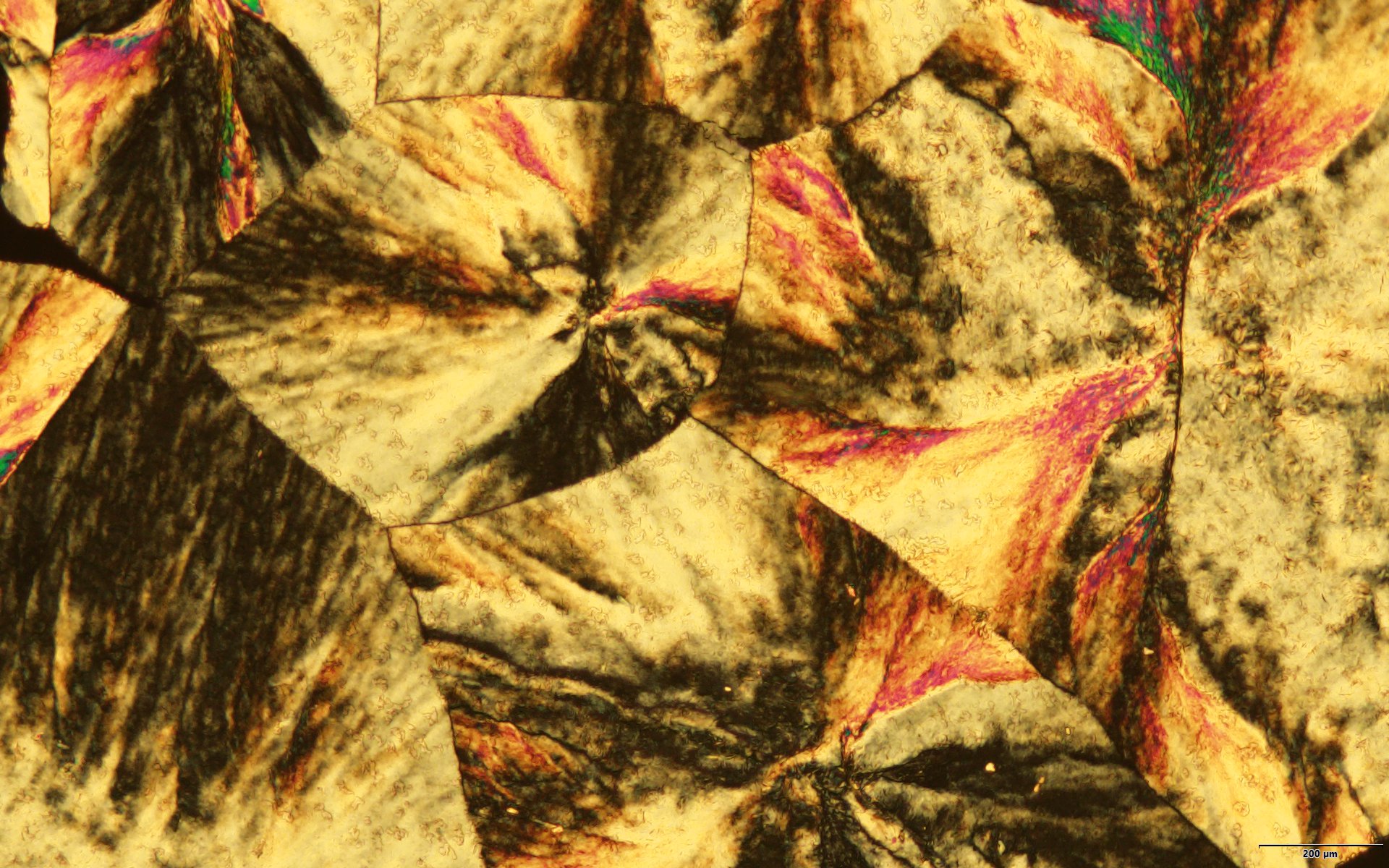
A polarized light microscopy view of a mixture of an azobenzene compound and a Phase Change Material. What looks like a stained-glass window or bird feathers is actually the microscopic world of energy storage. Such blends are key to developing "smart" thermal energy storage systems with light-responsive properties.
This image reveals the mosaic-like crystalline domains formed within a mixture of Azobenzene and a Phase Change Material. Using polarized light, the geometric boundaries show where different crystal orientations meet during solidification, showcasing the beautiful complexity found in materials science research
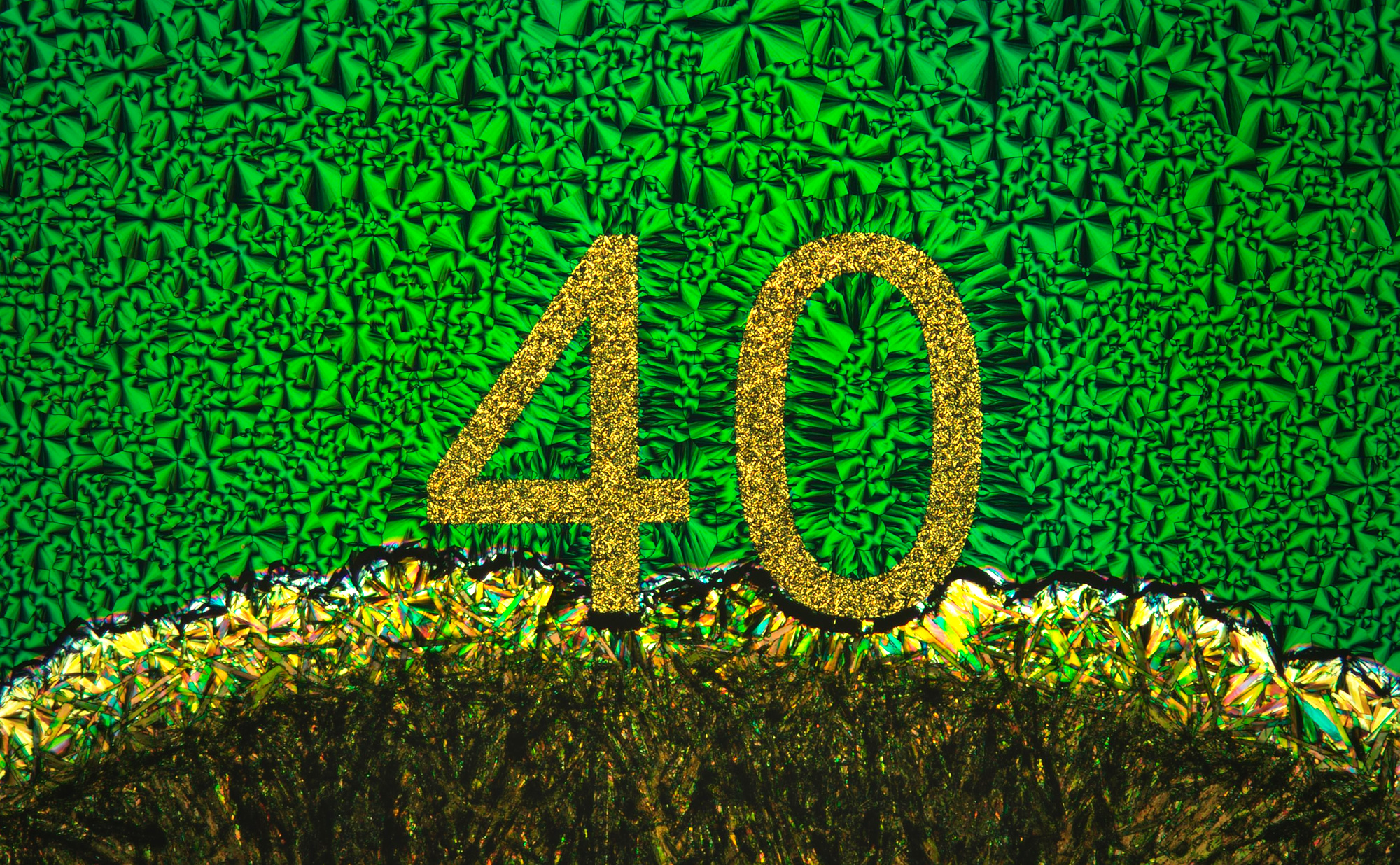
A size label made on the sample by lithography ended up right at the frontier of crystal growth – and happened to match the ICMAB anniversary year! Captured with Olympus BX51 microscope.
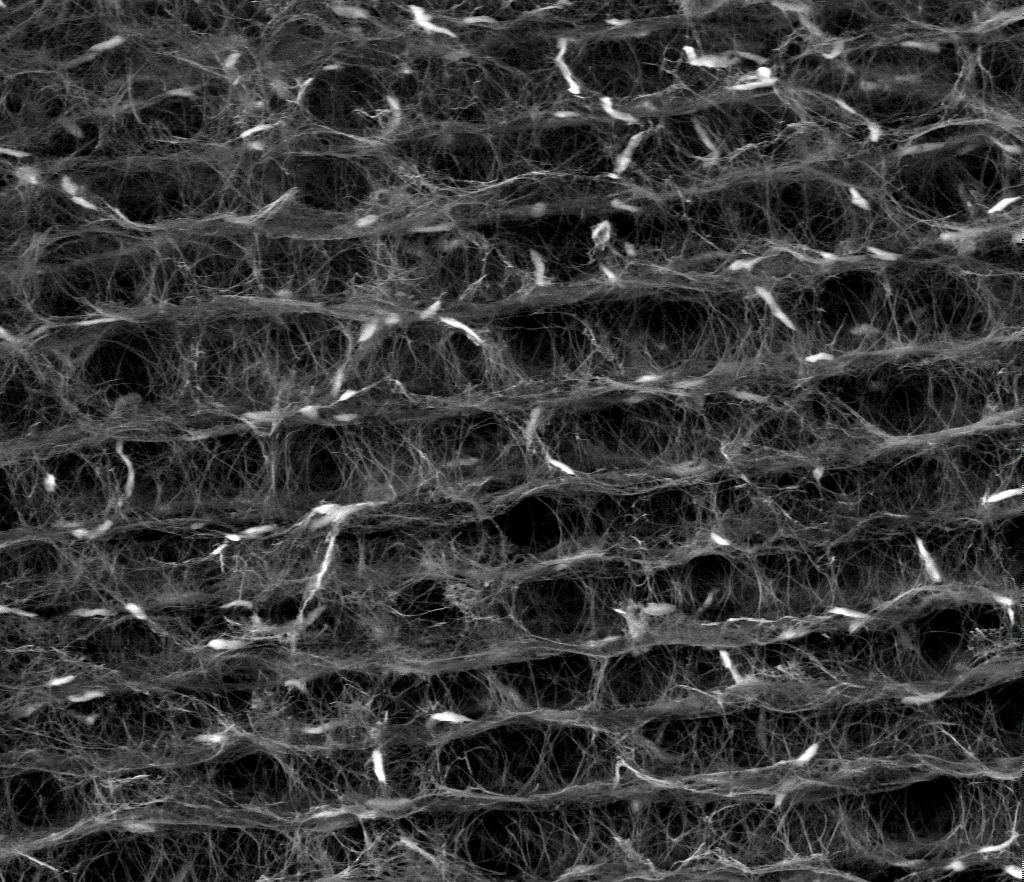
Cut through a sheet of Bacterial Cellulose and you find an entire hidden world — a sprawling fibrous metropolis, with its builders still roaming the streets. Nature's own nanofactory, caught mid-construction.
- Author:
Ling Roca Pla
- Picture:
Curcuminoid-based crystallised compound deposited onto SiO2 through sublimation. When this sample was analysed under the MO (50x), I could only gawk with awe: the kaleidoscope of green and pink crystals blooms forming a gradient along the picture undeniably evokes the picturesque "Antoni Gaudí" art.
Optical microscopy image of the selective deposition of semiconductor crystals on a chemically modified substrate. The treated regions inhibit crystal growth, while in the transistor channel the semiconductor crystals grow, forming a polycrystalline layer. This contrast between hydrophobic and hydrophilic properties induces a well-defined pattern, relevant for the development of printed electronics, where wettability and capillary forces govern the formation of semiconductor layers.
This composite SEM–BSE image captures the calcium metal counter electrode surface after stripping during the evaluation of emerging calcium battery technologies. Blue–green gradients indicate light elements (C, O, and F), while red denotes Ca. Two closely spaced pits appear to merge, forming a microcosmic convergence. This morphology reveals pronounced interfacial heterogeneity, challenging the common assumption of a homogeneous counter electrode.
Imagen obtenida con microscopio óptico con luz polarizada que muestra estructuras cristalinas con morfología floral en tonos azules y patrones simétricos formados tras el tratamiento térmico de los films preparados desde disolución.
- Author:
Ling Roca Pla
- Picture:
Curcuminoid-based crystallized compound deposited onto SiO2 through sublimation. Under the MO (20x), in a certain region of my sample (which I do not want to recall), the crystal shapes can remind us of a dragon flying near the Sun if you stare at it with a tipsy mindset.
An organic material transitioning from a polycrystalline thin film towards a tangle of three-dimensional elongated crystals. Captured with Olympus BX51 microscope.
The repetitive geometry and visual ambiguity evoke the Penrose Stairs and the lithograph Ascending and Descending by M. C. Escher.
Polymeric fibers composed of drug-loaded nanoparticles serve as a platform for formulating solid dosage forms. The drug used presents a pharmaceutical challenge due to its low water solubility; therefore, the use of these fibers helps increase the drug's solubility and bioavailability in the body.
This SEM image captures calcium dendritic growth resembling a snowflake, acquired during the evaluation of emerging calcium battery technologies.